
Cardax FT Digital Camera |
 |
|
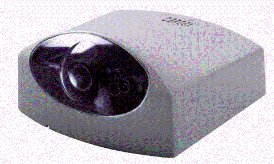
The Cardax FT Digital Camera is a fully digital security camera that integrates tightly with the Cardax FT system. Images are captured using a CMOS image sensor, processed by a Digital Signal Processor (DSP) and transmitted to the head-end PC via the Cardax FT Controller. The camera offers several unique features :
The camera has three processors, a PIC microcontroller that controls the CMOS image sensor, a DSP that performs the image processing, and a Z180 microcontroller that provides housekeeping and RS-485 communications to the FT Controller. My work on this project has involved programming the code download software on the Z180 (in assembler and C), some programming of the DSP (in C), as well as developing the camera viewer software for the head-end PC. The viewer is an ActiveX component developed using C++ and ATL, which is used by both the Cardax Command Centre FT software and a utility for installing the camera that I wrote in Visual Basic. This project was initially developed in association with Massey University's Department of Production Technology (now the Institute of Information Sciences and Technology) as part of a New Zealand government funded TBG (Technology for Business Growth) project (see Technology New Zealand, which is part of the New Zealand Foundation for Research, Science and Technology, for details of similar current schemes) for which I was the project manager. See Papers for a conference paper that describes the camera in more detail. |